
IBM AI: Inside Intelligent Systems
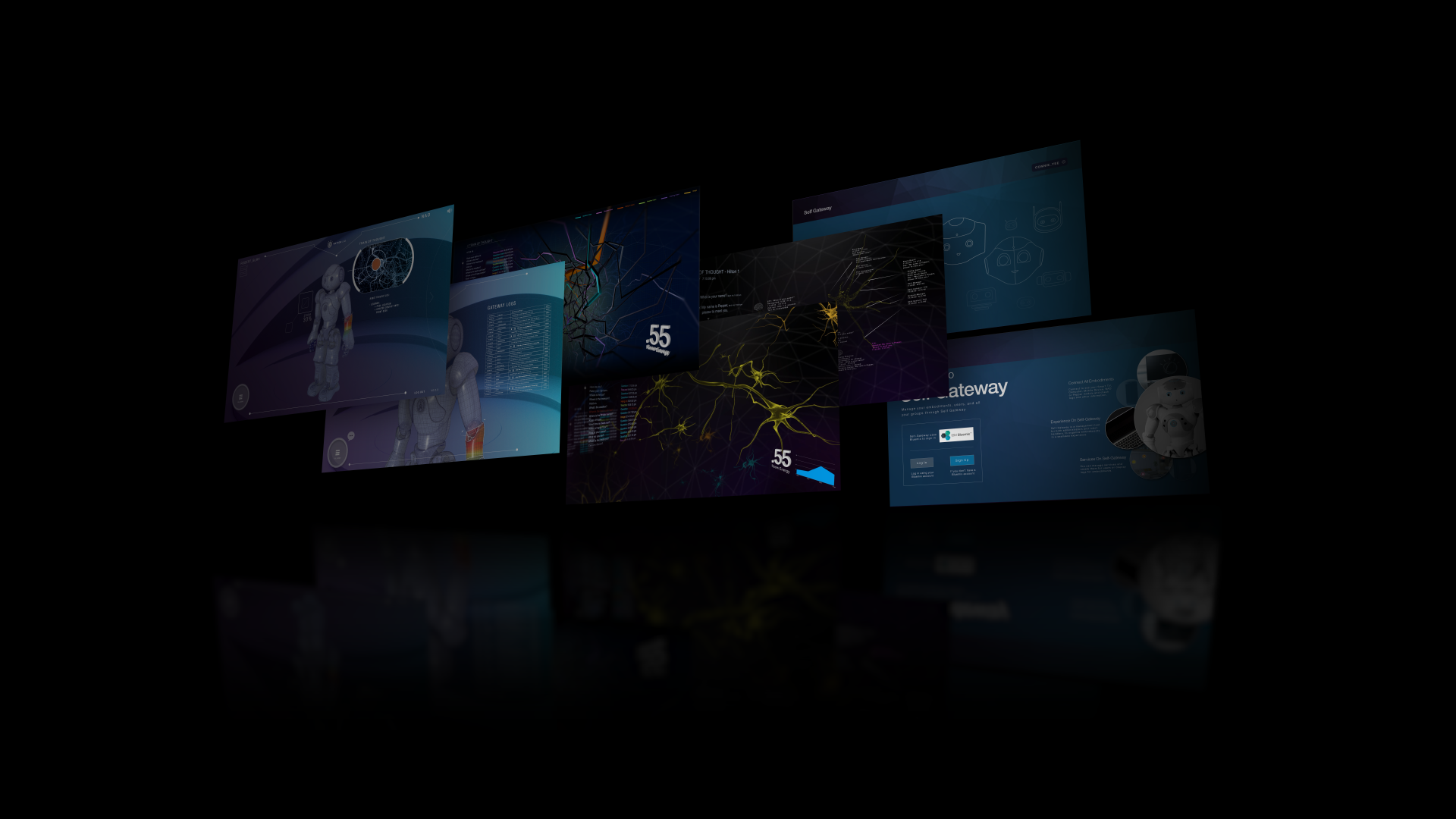
In 2016, I explored how engineers might inspect the behavior of a service robot powered by a network of specialized agents, services, and physical skills.
The system could listen to a person, interpret their intent, generate a response, and coordinate speech, gestures, and movement—but much of that activity remained invisible. I designed “Train of Thoughts,” an exploratory diagnostic experience that traced an interaction from human input through classification, planning, dialogue, and execution.
Through system mapping, visual experimentation, interaction design, and prototyping, I translated logs and machine activity into a navigable timeline of decisions, service calls, results, and failures. Research with IBM engineers ultimately revealed limited demand for the proposed experience, reinforcing a principle that continues to shape my work today: AI interfaces must be grounded in real user needs, not only in what technology can visualize.
Self Gateway: An Early AI Control Center
Service Robot Interface
Tracing System Behavior
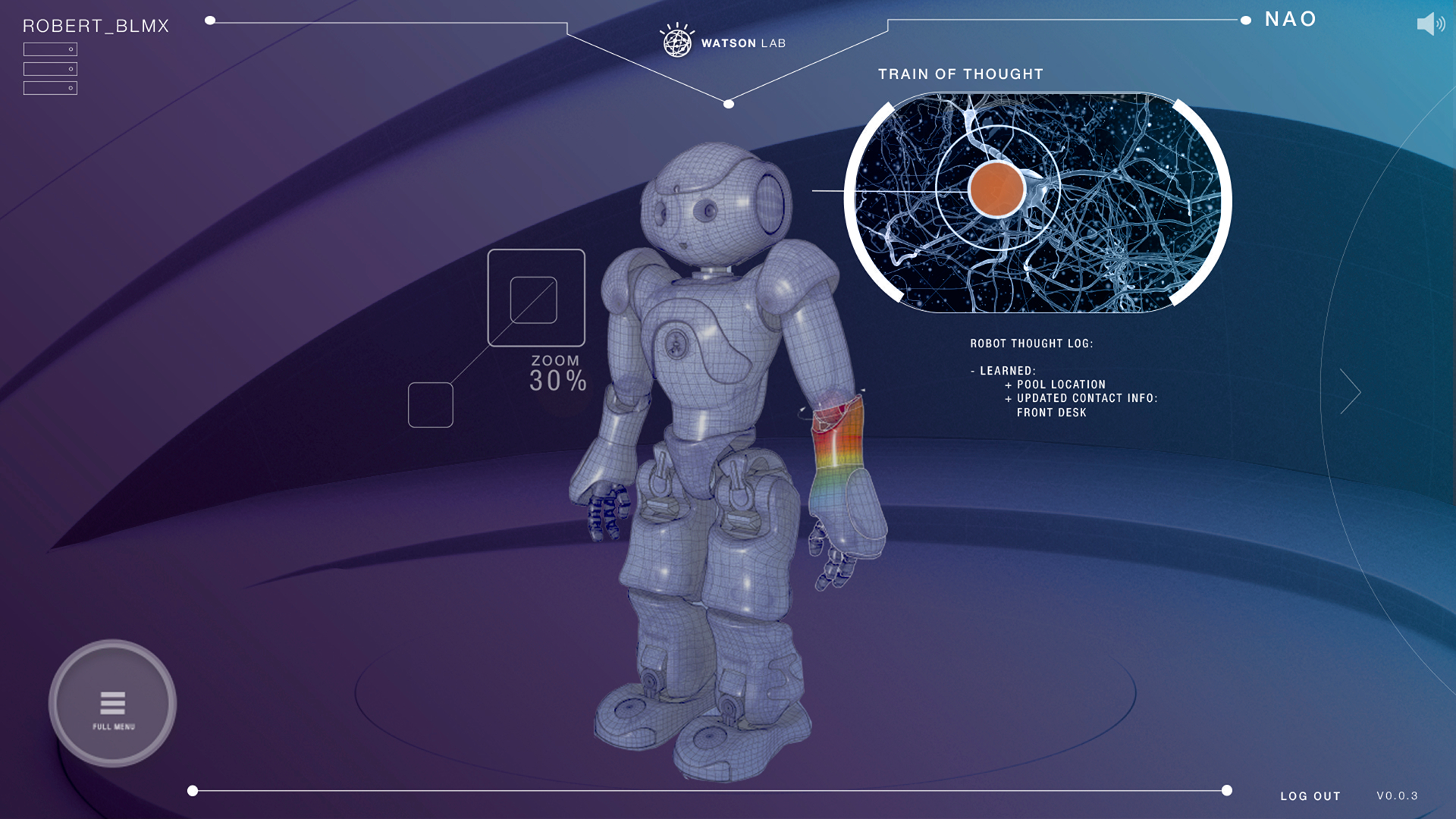
When the robot detected an issue, the interface surfaced a notification within the operational dashboard and provided a direct path into Train of Thoughts for deeper investigation.
Inside the diagnostic experience, engineers could follow activity across the system, observe connections forming between agents and services, and identify the branch associated with a specific interaction or failure. Active paths illuminated as information moved through the network, while changes in color, intensity, and form communicated system state.
The experience supported multiple levels of inspection—from monitoring the complete network to selecting an individual branch, opening its activity history, and examining the messages, timestamps, inputs, and outputs behind the robot’s behavior.
From Alert to Explanation. This behavioral prototype demonstrates how an engineer could move from a robot notification into the underlying system activity—following the relevant execution path, identifying failures, reviewing status logs, and inspecting the agents, services, and messages behind the robot’s behavior.
Interaction behaviors shown
The demo specifically communicates:
Move directly from an operational alert into the relevant diagnostic state.
Trace activity and failures across connected agents and services.
Isolate branches and inspect their messages, events, and history.
Navigate the larger spatial network through panning and rotation.
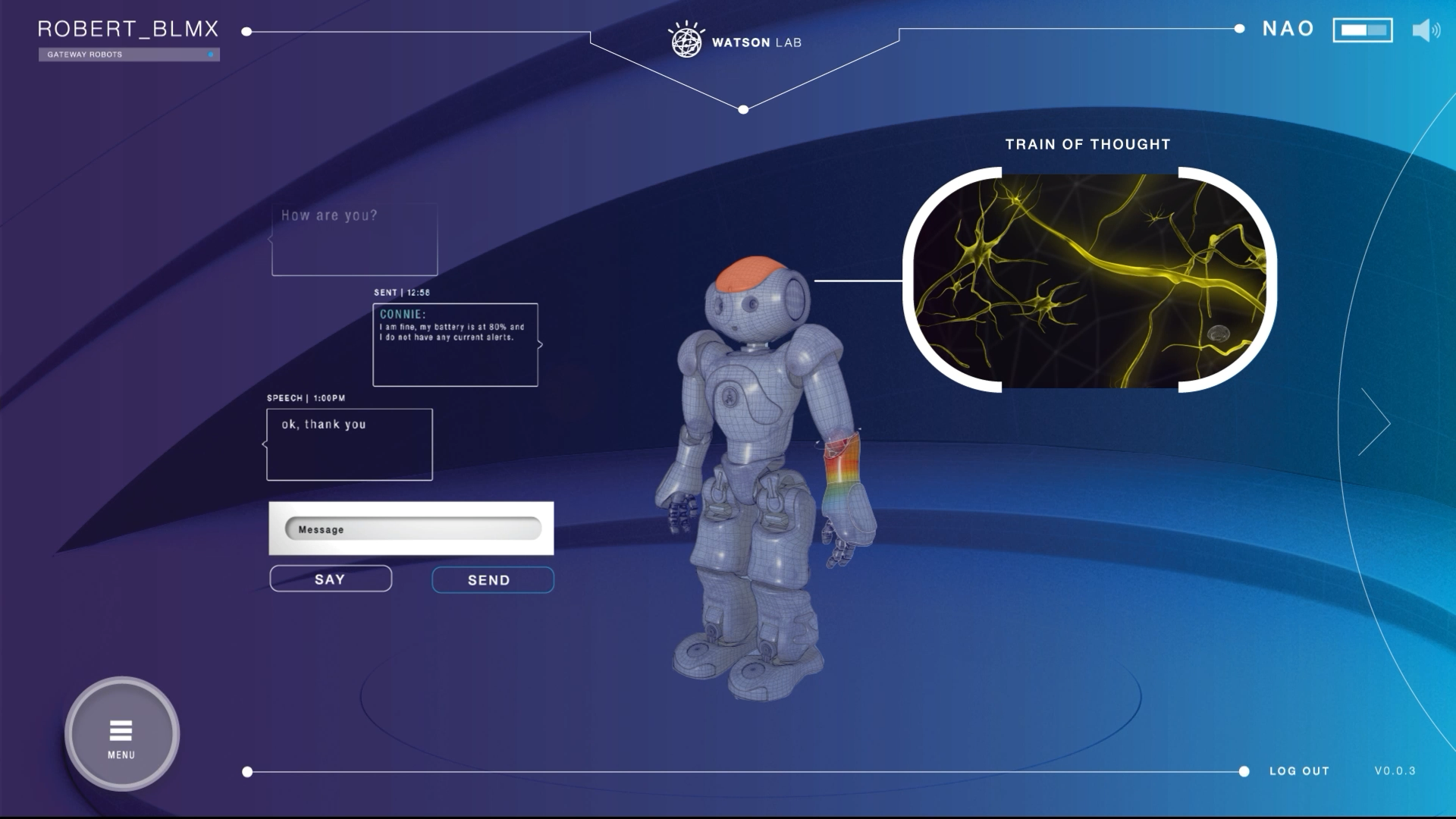
Alert to diagnosis. System notifications provided a direct route from the robot’s operational dashboard into the corresponding diagnostic state.
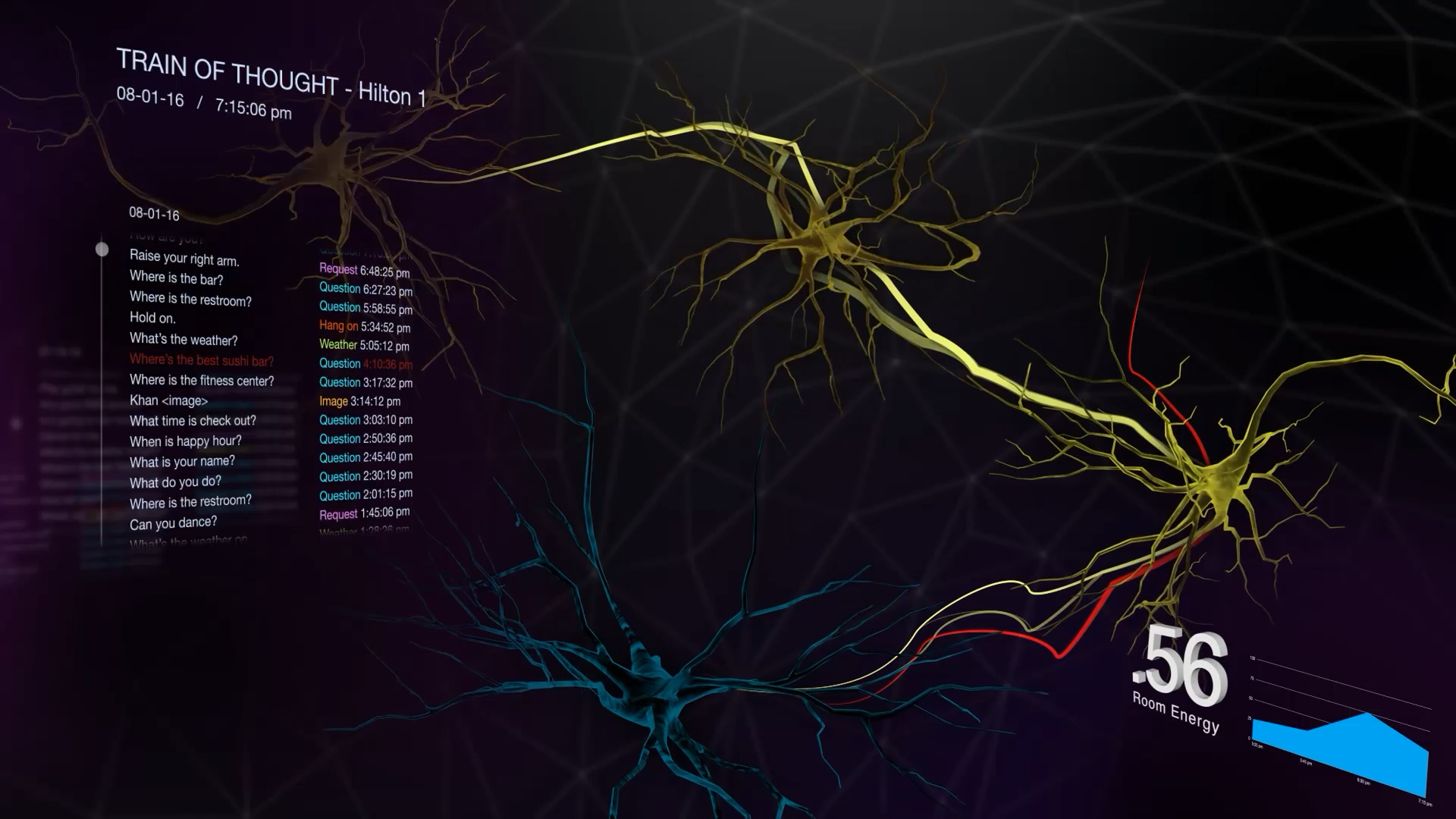
Visualizing activity and failure. Connections illuminated as information moved through the system, while color, intensity, and changes in form differentiated normal activity from failure states.
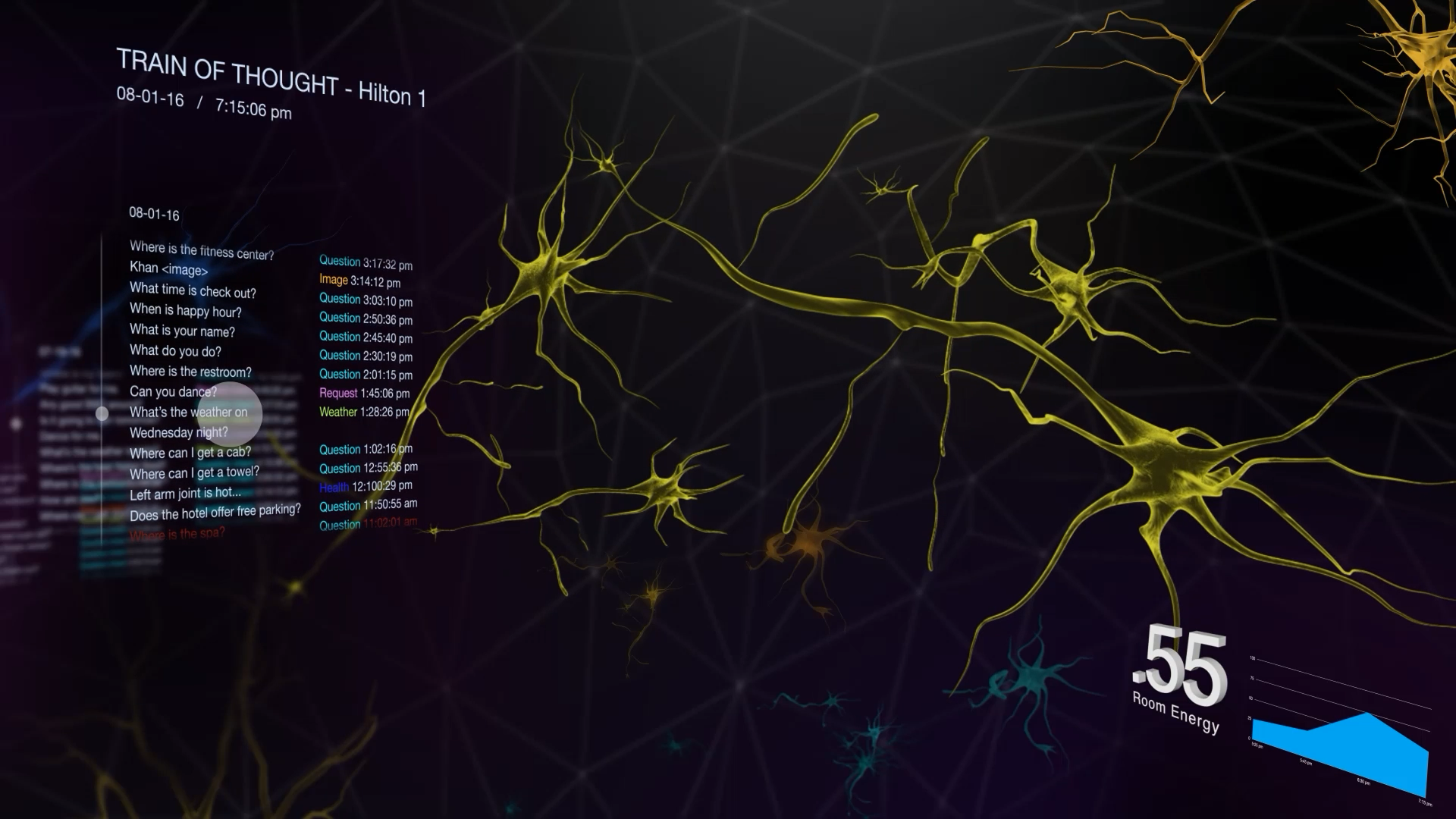
Inspecting the relevant path. Engineers could isolate a branch, review its activity history, and examine the messages and events behind the robot’s response.
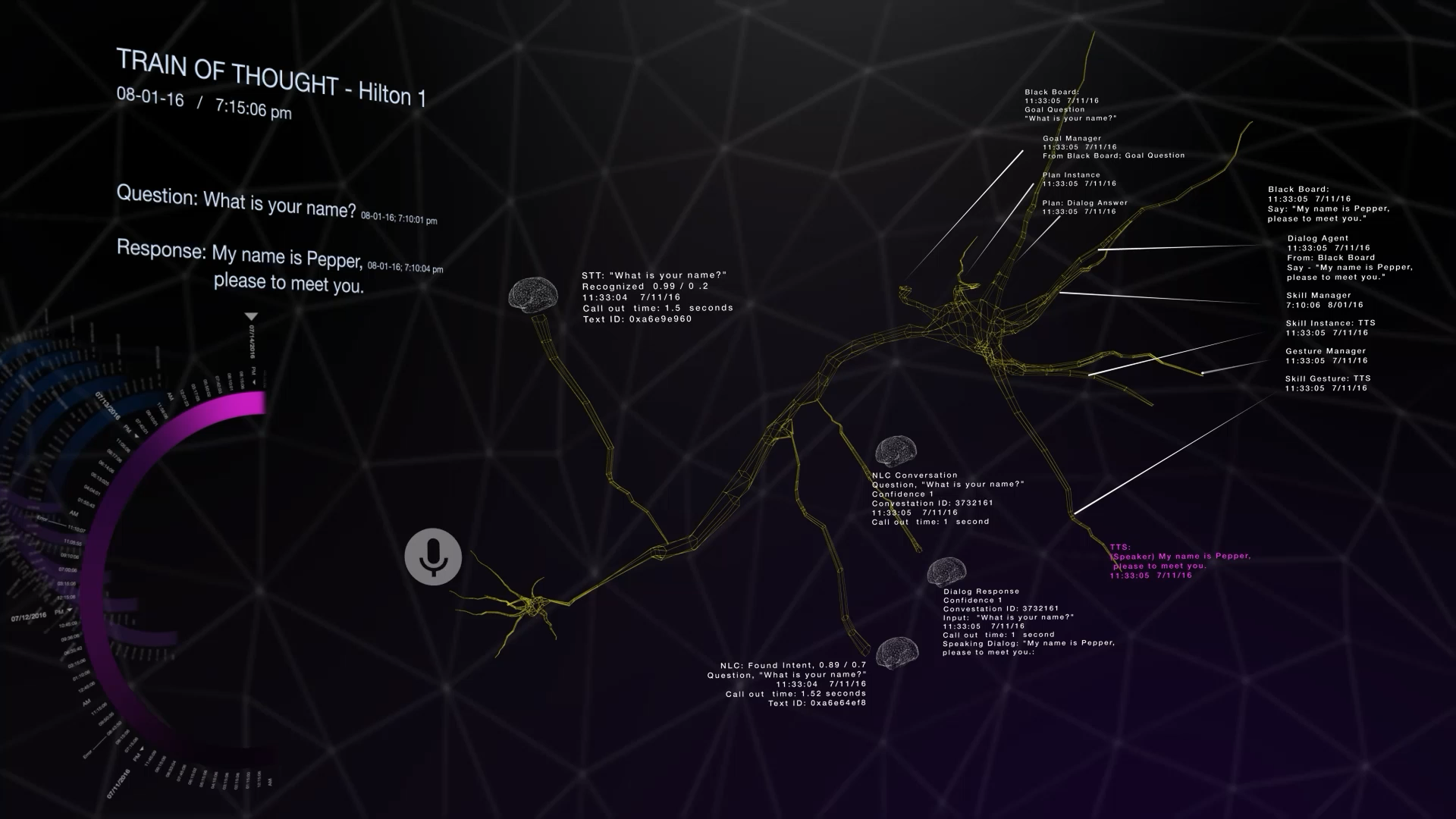
Moving through the system. A spatial exploration mode allowed engineers to pan, rotate, and follow relationships across a larger network of agents and services.
Self Gateway: An Early AI Control Center
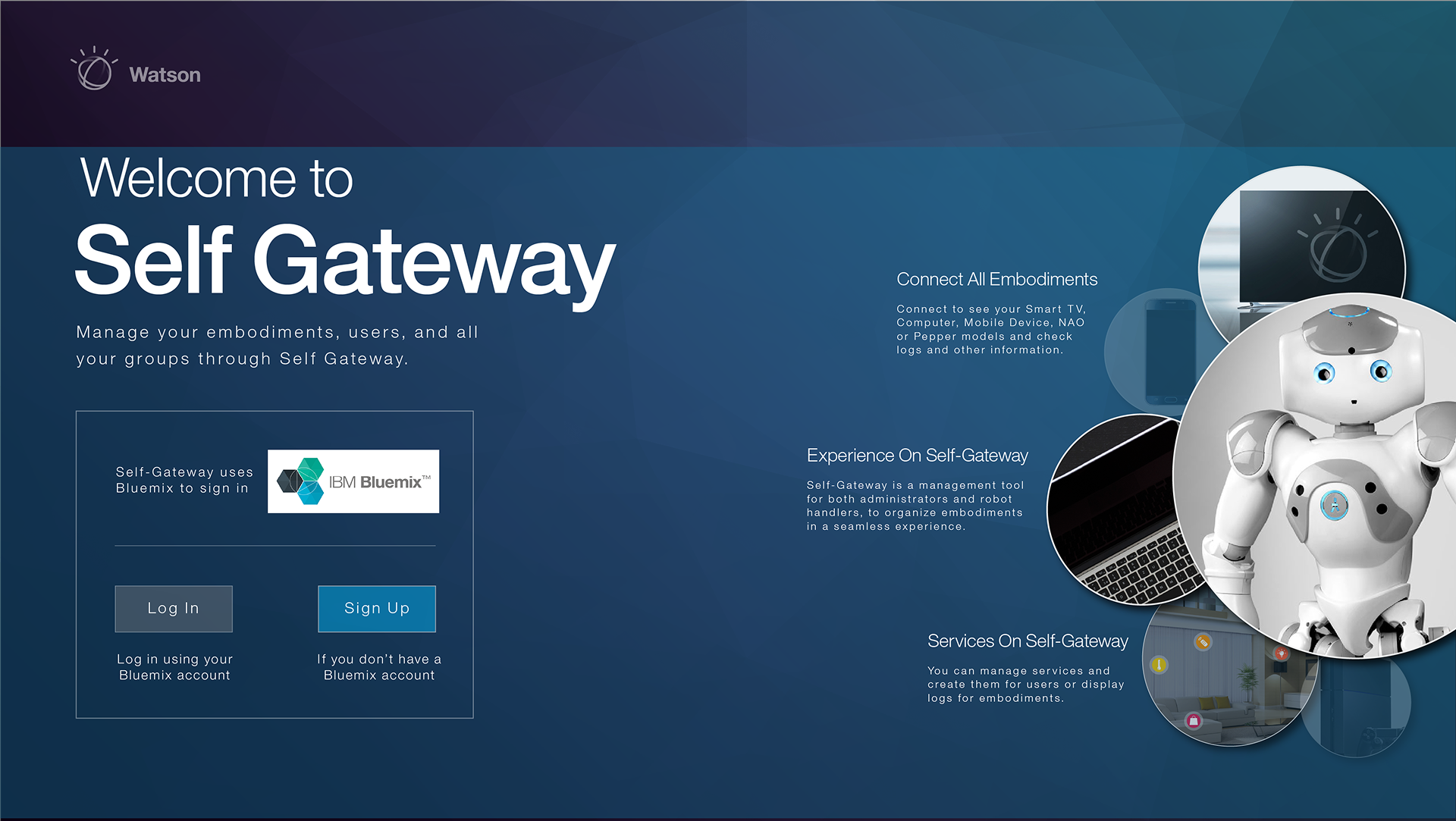
Originally called Self Gateway, this centralized experience brought AI-powered services, system information, and controls into one connected workspace. I designed the proof of concept and the broader information architecture, then collaborated with Connie, the back-end developer, to translate the experience into the finished web product.
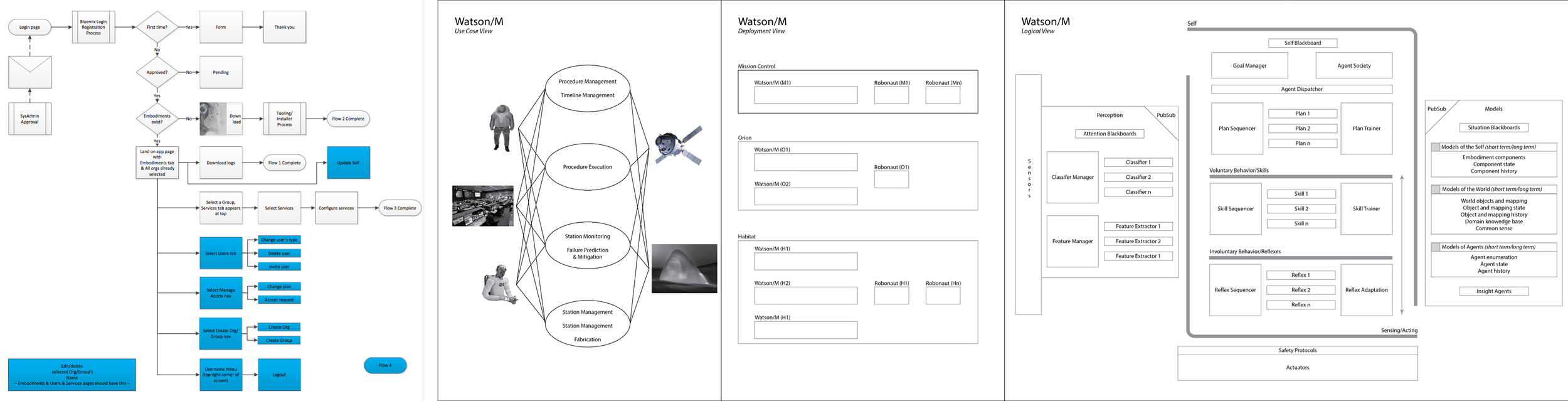
Early exploration of the interface structure, navigation, and visual direction.
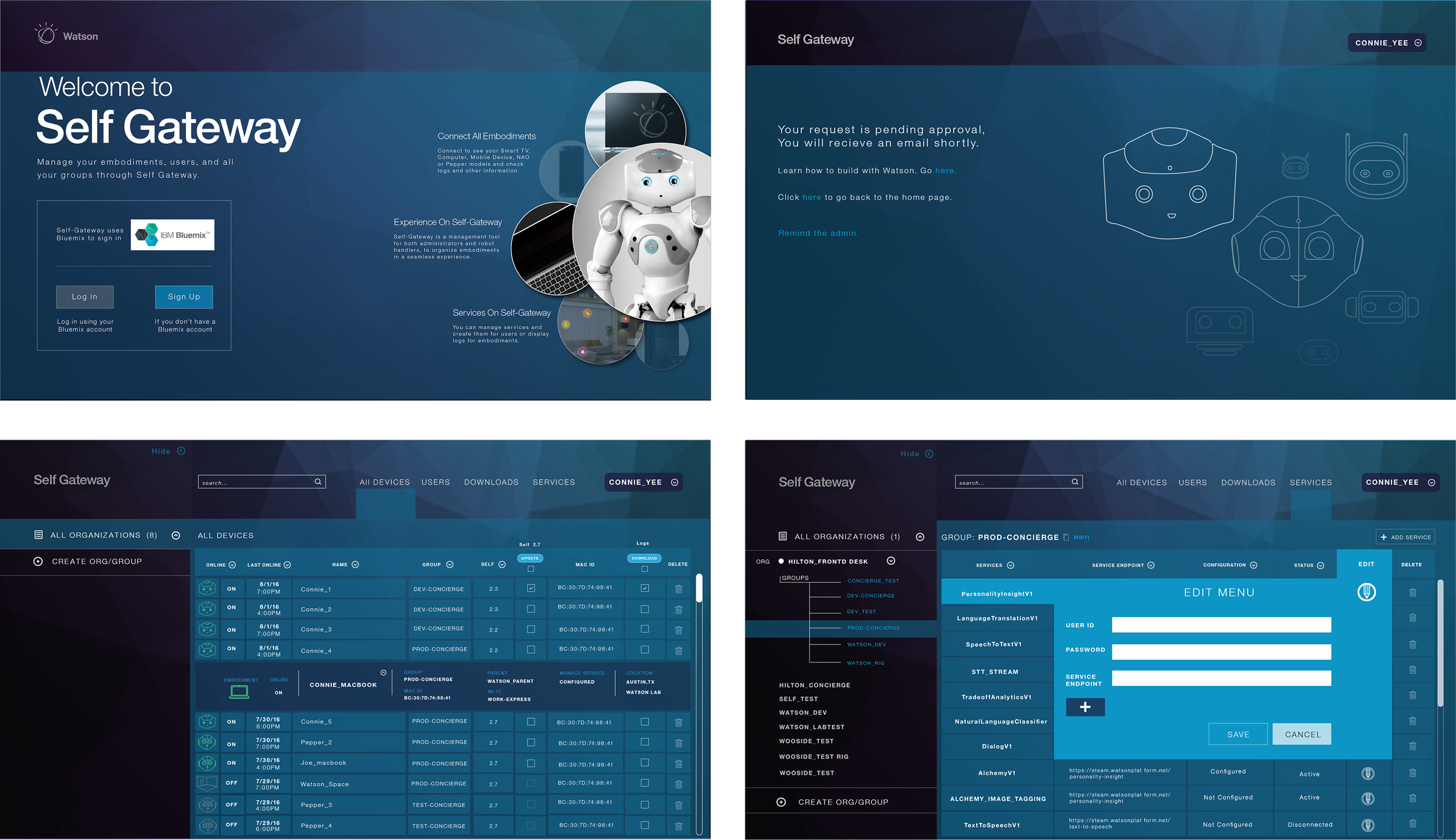
The finished Gateway pages developed and released from the original design direction.